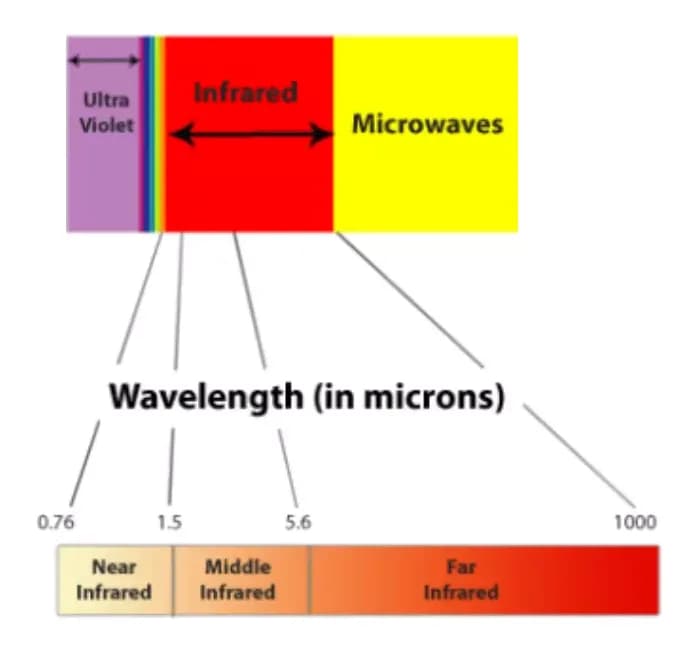
One of the most common questions I get asked is, “Are your saunas full spectrum?” It comes up so often that I thought it’s time to clear things up once and for all. So let’s break it down, what does full spectrum actually mean when we’re talking about infrared saunas?
In simple terms, a full spectrum sauna uses heating panels that emit near, mid, and far infrared light. Far infrared has the longest wavelength, which means it penetrates deeper into the body. That deep reach is where you’ll get benefits like detoxification, muscle recovery, relaxation, and improved circulation. On the other hand, near infrared has a much shorter wavelength, so it only goes just beneath the skin. That makes it more suitable for surface-level benefits like skin rejuvenation and wound healing. Mid infrared sits somewhere in between, with mild muscle benefits and slightly deeper penetration than near infrared.
Now, let’s talk about the two common types of panels used in infrared saunas: carbon and red lamp. Carbon panels are known for delivering a softer, more evenly distributed heat. They penetrate deeper, they’re cooler to touch, but they do take a little longer to heat up. Red lamp panels, by contrast, heat up quicker and get hotter to the touch, but they tend to give off a more intense surface heat and don’t penetrate quite as deeply as carbon, however, the heat is generally felt more intensely.
So now that we’ve covered the heating elements and the infrared wavelengths, let’s ask the real question, does full spectrum make a sauna better? Well, it depends.
If you’re comparing sauna options, it’s also worth understanding EMF levels in infrared saunas and what they actually mean for your choice.
Not all infrared heat is created equal. Full spectrum infrared heat offers a broader and more versatile approach by combining near, mid, and far infrared wavelengths in one sauna. Far infrared primarily delivers a deeper, gentler radiant heat, but full spectrum technology gives you the ability to experience different wavelengths and different types of heat in a single session. Near and mid infrared can complement the warming effects of far infrared, creating a more dynamic and comprehensive sauna experience.
For customers investing in a premium sauna, full spectrum provides greater versatility without having to choose between infrared technologies. Instead of limiting your experience to one wavelength, you get three infrared ranges working together, with the ability to tailor your sessions to your personal preferences. If you’re looking for the full suite of infrared effects, including some mild skin and surface-level benefits, then a full spectrum unit can have some added value. Is it a gimmick? Not really. But it often gets used as a marketing tool, especially by salespeople who don’t fully understand what they’re selling. So be cautious. Just because a sauna is labelled “full spectrum” doesn’t mean it’s automatically better for your needs.
If you’re comparing sauna prices and features, our guide to infrared sauna price discrepancies explains what can affect the cost.
Another big misconception I hear is people thinking that full spectrum saunas give you the benefits of red light therapy. Let’s clear that up: red light therapy and infrared heat therapy are two completely different things. Red light therapy is not about heat, it’s about light. Specific light wavelengths stimulate cellular energy production (ATP), improve skin health, accelerate healing, and reduce inflammation. I’ve been using red light therapy for over a decade, and I can tell you, it’s incredibly effective, but only when it’s done right.
For red light therapy to actually work, there are a few key factors. Firstly, the power and wavelength of the light. The most effective devices use anywhere from 630nm to 940nm with sufficient irradiance. Secondly is the coverage. You want a large number of LED lights to ensure they’re hitting enough of the treatment area. And third is the distance. The closer the light is to your skin, the more effective it is. Most devices need to be either in direct contact or just a few inches away from your body.
Now let’s look at what most infrared saunas offer in terms of red light. Some have chromotherapy lights on the roof or small LED strips. These might look cool, and they can help set a calming mood, but that’s about it. The light is too far away from your skin to deliver any real red light therapy benefits, and often it’s only shining on a small area like the top of your head. Some saunas allow you to place a proper red light panel inside, usually positioned at the front on the floor, but again, what part of your body is that really targeting? Mostly just your shins.
So let’s not confuse things. Infrared saunas are incredible for heat-based therapy, relaxation, sweating, recovery, but they are not substitutes for proper red light therapy. If you’re chasing the cellular benefits of red light, you’re going to need a purpose-built device designed to hit the right wavelengths with the right strength and coverage.
There’s no harm in having some light inside your sauna, and there’s nothing wrong with a full spectrum model if it suits your goals. But don’t be misled. The core benefit of a sauna; any sauna, is heat. Whether it’s dry, steam, or infrared, it’s the heat that delivers the therapeutic effects. So stay informed, understand the difference between infrared heat and red light therapy, and make sure you’re investing in the right solution for the results you actually want.
So don’t stress if your sauna is full spectrum or not. Focus on quality. Focus on how your body responds. And most importantly, make sure you’re working with someone who understands what they’re talking about. Because when it comes to your health, it’s not about trends or flashy marketing, it’s about what truly works.