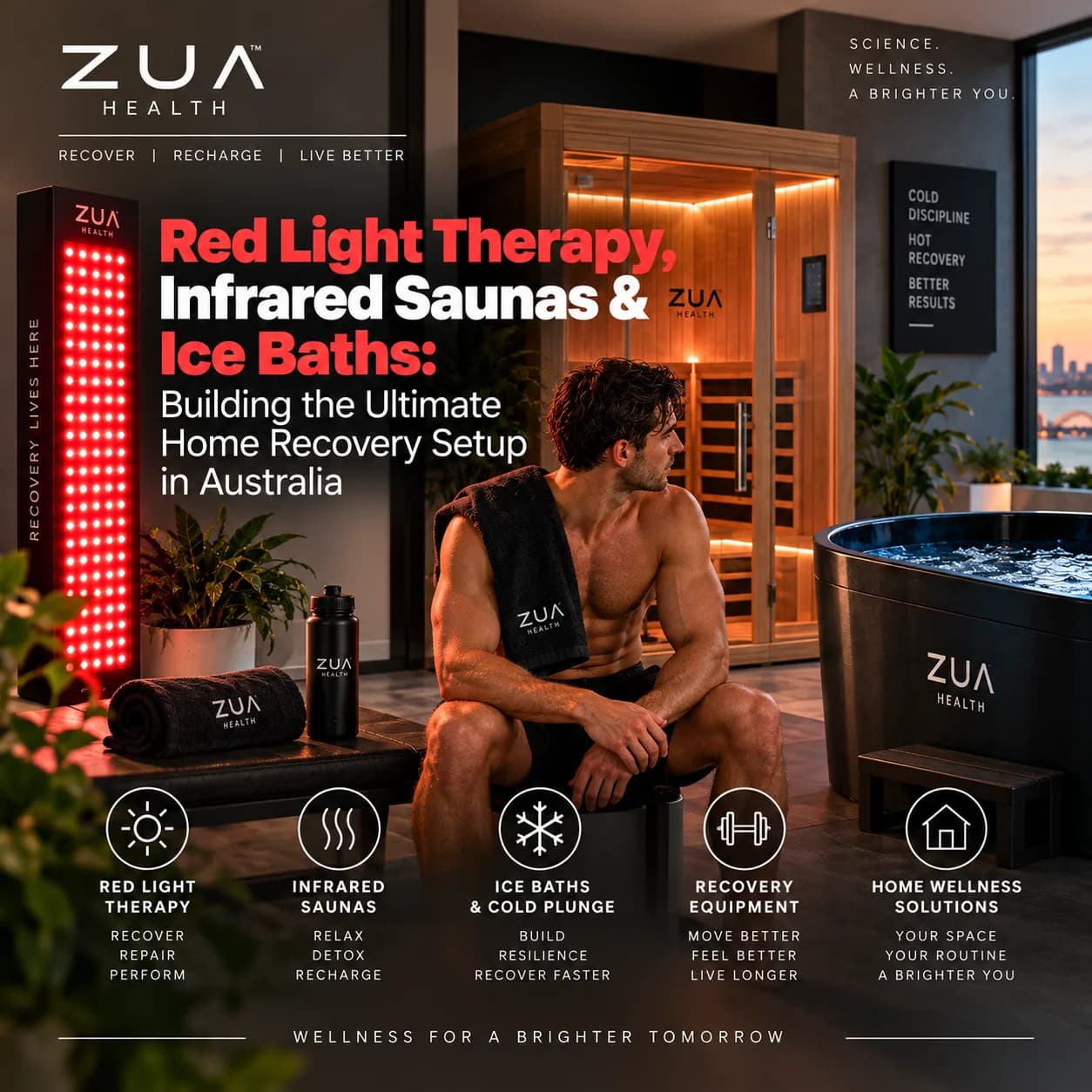
Red Light Therapy, Infrared Saunas & Ice Baths: Building the Ultimate Home Recovery Setup in Australia
Recovery is no longer something that only happens at a professional sports facility or wellness centre. Across Australia, more people are creating dedicated recovery spaces at home using technology such as red light therapy, infrared saunas, ice baths and other recovery equipment.
A home recovery setup can be as simple as a single red light therapy panel or as comprehensive as a dedicated wellness room combining heat, light, cold exposure and other recovery tools. The right setup depends on your goals, available space, budget and how consistently you are likely to use the equipment.
The key is not to buy every recovery product available. Instead, build a setup around technologies that complement your lifestyle and provide a practical way to maintain a consistent recovery routine.
In this guide, we look at the major categories of Recovery Equipment Australia customers are considering, including red light therapy, infrared saunas and ice baths, and explain how they can fit into a modern home recovery environment.
What Is a Home Recovery Setup?
A home recovery setup is a dedicated collection of equipment and routines designed to support recovery, relaxation, training and general wellness without requiring regular trips to a commercial facility.
For one person, that might mean a red light therapy panel positioned in a home gym. For another, it could mean an infrared sauna combined with an ice bath in a dedicated outdoor or indoor recovery area.
There is no universal formula. The best home recovery setup is one that matches your actual needs and can realistically become part of your routine.
Before choosing equipment, think about what you want to prioritise:
- Exercise and muscle recovery
- Relaxation and heat exposure
- Cold exposure
- Light-based wellness routines
- Performance and training support
- Convenience and consistency
- Creating a dedicated home wellness environment
Why Build a Recovery Space at Home?
One of the biggest advantages of home recovery equipment is convenience.
If you have to drive across town every time you want to use a sauna, recovery system or cold plunge, it can become difficult to maintain a consistent routine. Having equipment available at home removes much of that friction.
This is particularly useful for people who train regularly. A recovery session can be incorporated into the same environment as your gym, stretching area or daily routine.
Home equipment can also provide greater privacy and flexibility. Instead of working around the operating hours of a commercial facility, you can create a schedule that fits your day.
However, convenience only matters if the equipment is actually used. A smaller setup that fits naturally into your lifestyle can be more useful than a large collection of products that becomes difficult to manage.
1. Red Light Therapy: The Light-Based Foundation
Red Light Therapy Australia is one of the fastest-growing areas of home wellness and recovery equipment.
Red light therapy, also referred to as photobiomodulation in scientific literature, uses specific wavelengths of red and near-infrared light. Devices are available in different sizes, configurations and treatment areas.
Compact panels can be used for more targeted applications, while larger systems can provide significantly greater coverage.
ZUA Health offers different red light therapy solutions, including the A1200 Red Light Therapy Panel and full-body red light therapy systems.
Why Consider Red Light Therapy?
Red and near-infrared light have been investigated for a variety of applications, including skin-focused routines and aspects of exercise recovery. The evidence varies depending on the specific application, treatment protocol and device used.
For an active person, red light therapy can therefore be considered as one component of a broader recovery routine rather than a replacement for sleep, nutrition, hydration or appropriate training management.
The important thing is to choose a device based on its actual specifications and intended application rather than simply choosing the device with the biggest marketing claims.
What to Look for in a Red Light Therapy Device
- Wavelengths: Check which red and near-infrared wavelengths are provided.
- Irradiance: Look for clearly stated output measurements and the distance at which they were measured.
- Coverage: Decide whether you need targeted or full-body coverage.
- Session guidance: Follow the manufacturer's recommended distance and duration.
- Cooling: Larger devices should have appropriate thermal management.
- Construction: Consider the materials, mounting options and overall build quality.
- Warranty: A clear warranty is important for a significant equipment investment.
If you are comparing red light devices, read our detailed guide on how to choose a red light therapy device in Australia.
2. Infrared Saunas: Adding Heat to Your Recovery Space
Infrared Sauna Australia is another major category in the home wellness market.
Infrared saunas use infrared energy to create a heated environment. They provide a completely different experience from red light therapy, even though both technologies can involve infrared wavelengths.
An infrared sauna can become the centrepiece of a dedicated home recovery or relaxation room. Instead of using light as the primary experience, the sauna creates a controlled heat environment where users can sit and relax for a period of time.
You can explore the ZUA Health infrared sauna range when comparing different home sauna options.
Why Add an Infrared Sauna?
For many people, the primary attraction is the experience of heat and relaxation.
A sauna can become part of an evening routine, a post-training routine or a dedicated wellness ritual. The convenience of having one at home can make regular use easier than travelling to a commercial sauna.
However, sauna sessions are not simply about making the environment as hot as possible. Users should follow the manufacturer's operating instructions, remain appropriately hydrated and consider their individual circumstances when deciding whether heat exposure is suitable for them.
Red Light Therapy vs Infrared Sauna: What's the Difference?
These two technologies are sometimes grouped together because of the word “infrared”, but they should not be confused.
| Feature | Red Light Therapy | Infrared Sauna |
|---|---|---|
| Primary technology | Red and near-infrared light | Infrared heat |
| Main experience | Light exposure | Heated environment |
| Typical equipment | Panel, bed or light system | Enclosed sauna cabin |
| Primary consideration | Wavelength, irradiance and coverage | Temperature, construction, size and power |
| Space requirement | Can range from compact to full-body | Usually requires dedicated floor space |
Because they work differently, some people choose to include both technologies in their home wellness environment rather than treating them as alternatives.
3. Ice Baths & Cold Plunges: Bringing Cold Exposure Home
Ice Bath Australia and Cold Plunge Australia are increasingly relevant to athletes, gym users and people interested in structured cold exposure.
An ice bath or cold plunge provides controlled exposure to cold water. Cold-water immersion is commonly used by athletes as part of recovery strategies, although the ideal timing and frequency can depend on the individual's training goals.
One advantage of dedicated cold plunge equipment is consistency. Instead of filling a conventional bathtub and repeatedly buying or preparing ice, a purpose-built system can make cold exposure easier to incorporate into a routine.
ZUA Health offers ice bath and cold exposure equipment for Australian wellness environments.
What Should You Consider When Choosing an Ice Bath?
- Size: Make sure the system is suitable for the intended users.
- Temperature control: Consider how the water temperature is managed.
- Filtration: Look at the water management system and maintenance requirements.
- Placement: Consider drainage, access and the surrounding environment.
- Maintenance: Understand how often the system requires cleaning or servicing.
- Safety: Follow the manufacturer's cold-exposure guidance.
Cold exposure should also be approached progressively. Extremely cold water or prolonged exposure is not automatically better, and people should understand their own tolerance and follow appropriate safety practices.
4. Recovery Equipment Beyond Red Light, Heat and Cold
A complete recovery setup does not necessarily stop at three technologies.
The broader category of Recovery Equipment Australia can include compression systems, massage tools, mobility equipment and other technologies designed around physical recovery.
For example, compression equipment can be useful for people looking to incorporate a dedicated compression session into their routine, while mobility and massage tools can complement stretching and movement work.
The important point is to think of recovery equipment as a system rather than a collection of unrelated products.
How the Different Technologies Fit Together
One of the most useful ways to design a home recovery environment is to think about what each technology adds.
| Technology | Role in a Home Setup | Space Requirement |
|---|---|---|
| Red Light Therapy | Light-based wellness and recovery routine | Small to large depending on device |
| Infrared Sauna | Heat exposure and relaxation | Dedicated space |
| Ice Bath | Cold-water exposure | Indoor or outdoor dedicated space |
| Compression Equipment | Targeted recovery routine | Generally compact |
| Mobility Equipment | Movement, stretching and flexibility work | Small |
This approach makes it easier to avoid unnecessary purchases. Instead of asking “What equipment should I buy?”, ask “What part of my recovery routine is currently missing?”
Building the Ultimate Home Recovery Setup
The phrase “ultimate” does not necessarily mean the most expensive setup possible. A genuinely useful home recovery environment should be convenient, practical and easy to use.
Stage 1: Start With Your Main Goal
Before buying anything, identify your primary objective.
If you are mainly interested in light-based recovery, a quality red light therapy system may be the most logical starting point.
If relaxation and heat exposure are your priorities, an infrared sauna may make more sense.
If you regularly train and specifically want to incorporate cold exposure, an ice bath could become a central part of your setup.
Stage 2: Consider Your Space
Available space is one of the most overlooked factors when purchasing home wellness equipment.
A red light panel can often be incorporated into an existing bedroom, home gym or treatment area. A sauna and ice bath require considerably more planning.
Before purchasing larger equipment, measure the area carefully and consider access, ventilation, drainage, electrical requirements and maintenance.
Stage 3: Build Around Consistency
The best recovery setup is one you will actually use.
If equipment takes too much time to prepare or is difficult to access, it may eventually become underused. Position your equipment so that using it is straightforward and fits naturally into your existing routine.
Stage 4: Add Technologies Gradually
You do not have to build the entire recovery room in one purchase.
Starting with one or two technologies allows you to understand how they fit into your lifestyle before investing in additional equipment.
This is particularly useful when creating a home wellness environment for the first time.
Example Home Recovery Setup for an Active Australian
Imagine a home gym with a small dedicated recovery area.
A large red light therapy panel could be positioned near the training area so it is easy to access after exercise. A sauna could be installed in a separate section of the room or another suitable area of the home. An ice bath could then be positioned outdoors or in another appropriately prepared space.
The setup does not need to be complicated.
The user could structure their week around normal training, adequate sleep and nutrition, with recovery technologies incorporated where appropriate.
The equipment becomes part of the routine rather than the entire routine.
Should You Use Red Light Therapy, Sauna and Ice Baths on the Same Day?
There is no universal requirement to use every recovery technology during the same session.
In fact, trying to combine everything into one long routine can make recovery unnecessarily complicated.
Instead, think about the purpose of each technology and when it fits naturally into your schedule.
For example, red light therapy may be incorporated into a regular light-based wellness routine, while sauna sessions may be used separately for heat and relaxation. Cold exposure may be used according to an individual's training goals and preferences.
Always follow the manufacturer's instructions for each device and avoid assuming that more sessions, longer exposure or higher intensity automatically produces better outcomes.
Home Recovery Setup for Gym Users
For people who train several times per week, the recovery environment can become an extension of the home gym.
A simple setup might include:
- Strength or cardio training equipment
- Red light therapy
- Mobility and stretching space
- Compression or massage equipment
- Infrared sauna
- Ice bath or cold plunge
Not every person needs every item. The right combination depends on the type of training, frequency of exercise, available space and personal preferences.
Home Recovery Setup for Wellness and Relaxation
A recovery space does not have to be designed exclusively for athletes.
Many people are interested in creating a dedicated wellness environment simply because they want more convenient access to relaxation and personal wellness routines.
An infrared sauna can become a central part of a relaxation area, while red light therapy can provide another technology-based routine. Comfortable seating, appropriate lighting, hydration and a quiet environment can complete the space without requiring a large collection of equipment.
What About Biohacking?
The growth of Biohacking Australia communities has also contributed to interest in home wellness technology.
Biohacking is a broad term and can refer to everything from sleep optimisation and nutrition tracking to environmental changes and technology-assisted wellness routines.
Red light therapy, sauna and cold exposure are often discussed within this space because they provide structured interventions that can be incorporated into a personal routine.
However, a sensible approach is to avoid treating wellness technology as a shortcut.
Sleep, nutrition, exercise, hydration and stress management remain fundamental. Technology should complement those foundations rather than replace them.
How Much Does a Home Recovery Setup Cost?
The cost can vary significantly depending on how large and sophisticated your setup becomes.
A compact red light therapy device may require considerably less investment and space than a full-body system, sauna or dedicated cold plunge.
Rather than setting a budget around a predetermined list of products, consider your priorities first.
For example, you might begin with one high-quality technology and later add another when you have established a consistent routine and understand what you actually need.
What to Check Before Buying Recovery Equipment in Australia
Before purchasing Wellness Equipment Australia customers should compare more than just the advertised headline features.
Specifications
Look closely at the technical specifications relevant to the product category. For red light therapy, consider wavelengths, irradiance and treatment area. For saunas, consider dimensions, construction and power requirements. For ice baths, consider water capacity, temperature management and filtration.
Warranty
Recovery equipment can represent a substantial investment. Check what the warranty covers and how long it lasts.
Australian Availability
Local stock and support can be particularly useful for larger or more technical equipment. Consider delivery, servicing, replacement parts and customer support.
Installation
Large equipment may require more preparation than expected. Check dimensions, access routes, electrical requirements, drainage and ventilation before ordering.
Safety
Always read the manufacturer's safety information and operating instructions. Different technologies have different considerations, and individual circumstances can affect whether a particular recovery method is appropriate.
Home Wellness Equipment vs Commercial Recovery Facilities
Commercial recovery facilities can be useful because they provide access to multiple technologies without requiring you to purchase or maintain the equipment yourself.
The disadvantage is that you need to travel to the facility and work around its availability.
Home wellness equipment reverses that equation. You pay the initial investment and take responsibility for the equipment, but the technology is available whenever it fits your routine.
For people who intend to use equipment regularly over a long period, convenience can become an important part of the overall value.
Creating a Dedicated Australian Home Wellness Space
When designing a home wellness area, consider more than the equipment itself.
Think about flooring, ventilation, electrical access, lighting, storage, drainage and cleaning. Larger equipment should be positioned where it can be safely accessed and maintained.
If you are creating a multi-technology recovery room, leave enough space around each system so the room does not become difficult to use.
A clean, organised environment also makes it easier to maintain a consistent routine.
The ZUA Health Approach to Home Recovery
ZUA Health provides a range of red light therapy, infrared sauna, ice bath and recovery-focused equipment for Australian customers.
The product range includes compact solutions as well as larger systems designed for home, gym, clinic and wellness environments.
You can explore the complete ZUA Health product range to compare available recovery and wellness equipment.
For red light therapy specifically, you can explore the red light therapy collection, while the red light bed range provides larger full-body options.
Frequently Asked Questions
What is the best home recovery equipment in Australia?
There is no single best recovery device for everyone. The right choice depends on your goals, available space, budget and preferred routine. Red light therapy, infrared saunas, ice baths and compression equipment all serve different purposes.
Can red light therapy and infrared saunas be used together?
They are different technologies, so some people choose to incorporate both into a broader wellness routine. Follow the instructions for each product and avoid assuming that longer or more intense sessions are automatically better.
Is an ice bath necessary for recovery?
No. Cold exposure is one recovery strategy among many. Whether it is useful depends on your goals, training routine, preferences and circumstances. Sleep, nutrition, hydration and appropriate training management remain important foundations.
How do I start building a home recovery room?
Start by identifying your main goal and choosing one technology that directly supports it. Consider your available space, electrical requirements, maintenance and budget before adding more equipment.
Is red light therapy good for athletes?
Red light therapy and photobiomodulation have been investigated in relation to exercise recovery and performance. Results can vary according to the treatment protocol and application, so it is best considered as one component of a broader recovery strategy.
How much space do I need for a home recovery setup?
It depends on the equipment. A compact red light panel can require relatively little space, while an infrared sauna or ice bath needs a dedicated area. Always check the dimensions and installation requirements of the specific product.
What is the difference between an ice bath and a cold plunge?
Both involve cold-water immersion. An ice bath may refer to a setup where cold water is manually prepared using ice, while a dedicated cold plunge is designed specifically for controlled cold-water use and may include temperature management and filtration.
Final Thoughts: Build a Recovery Setup That You Will Actually Use
The idea of a complete home recovery environment can be exciting, but the most effective setup is not necessarily the biggest or most expensive one.
Red light therapy, infrared saunas and ice baths each offer a different type of experience. Red light therapy provides a light-based approach, infrared saunas introduce heat exposure and relaxation, while ice baths provide controlled cold-water exposure.
When combined thoughtfully, they can become part of a broader home wellness routine.
The smartest approach is to start with your goals, understand what each technology is designed to do and choose equipment that fits your space and lifestyle.
Whether you are an athlete building a dedicated recovery room, a homeowner creating a personal wellness space or someone simply looking for more convenient access to recovery technology, the right setup should make your routine easier—not more complicated.
Explore ZUA Health's home recovery and wellness equipment to discover red light therapy, infrared saunas, ice baths and other solutions designed for Australian homes and wellness environments.